

MLCC Voltage Coefficient: Calculate Capacitance Under DC Bias
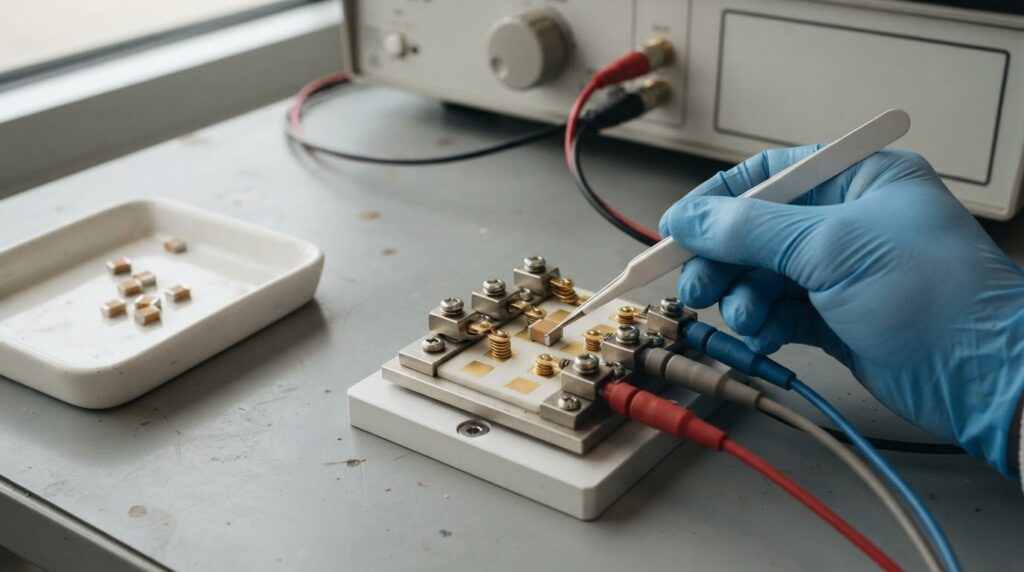
A higher voltage rating doesn’t guarantee that a Class II MLCC will retain its nominal capacitance under DC bias. An MLCC voltage coefficient of…
MLCC Flex Cracking: How Soft Termination Helps Prevent Damage
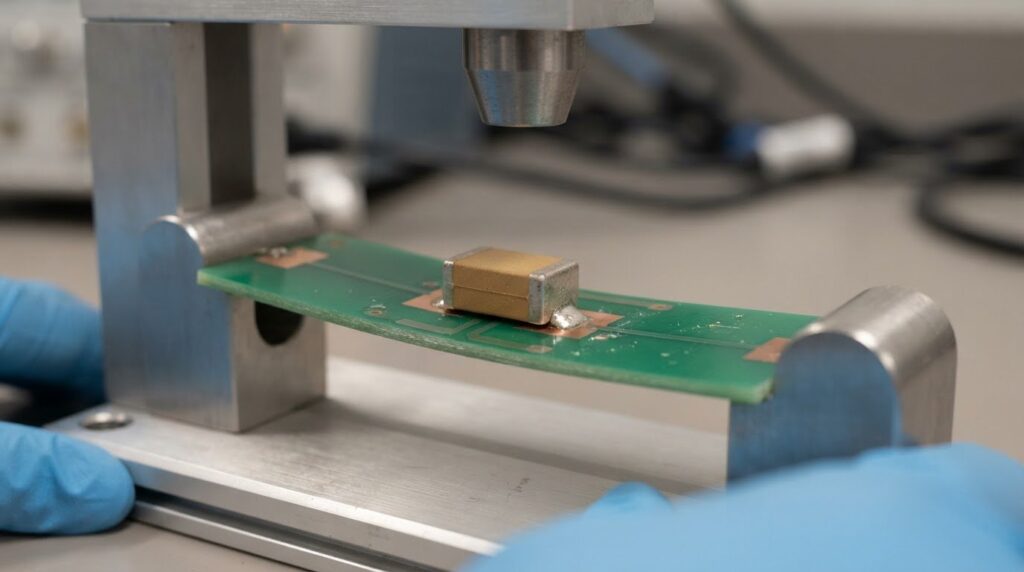
A capacitor crack can begin when stress transfers from a flexing circuit board. MLCC flex-cracking prevention using soft termination adds a…
High-temp ceramic capacitor capacitance drift at 125C: rates and causes
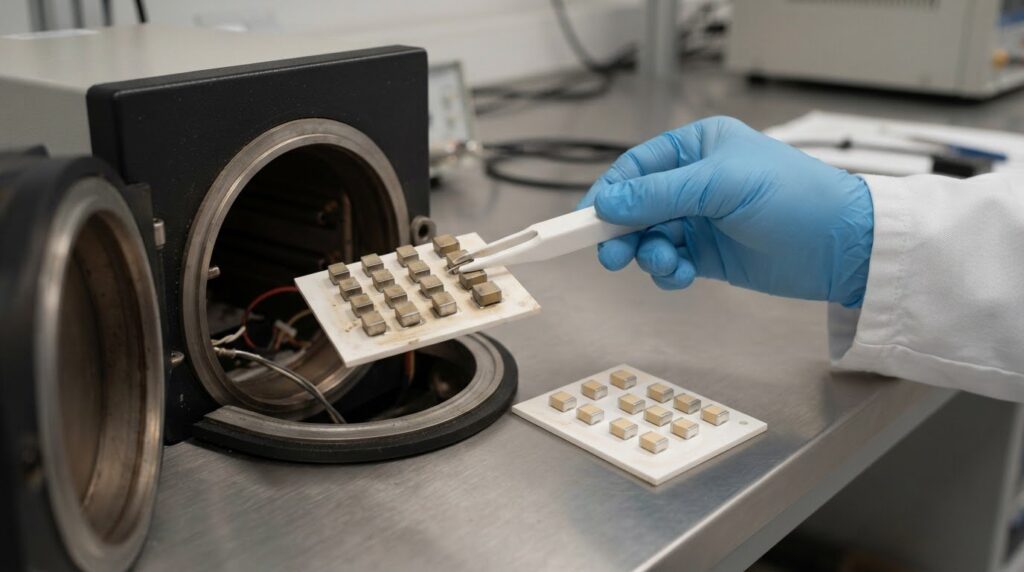
A 125C operating point doesn’t tell the full capacitance story. At 125C, capacitance drift in a high-temp ceramic capacitor can reflect both…
Match Automotive-Grade MLCCs by Series, Package, and Rating
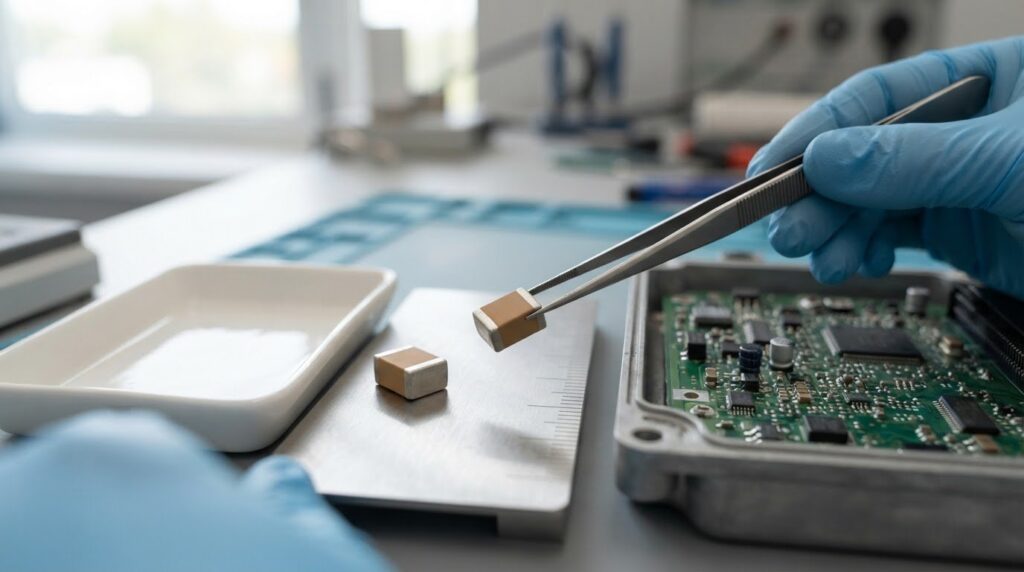
A matching capacitance and package don’t make two automotive MLCCs interchangeable. An automotive grade MLCC cross reference guide compares the…
MLCC acoustic microphonics: what causes the noise and how to reduce it
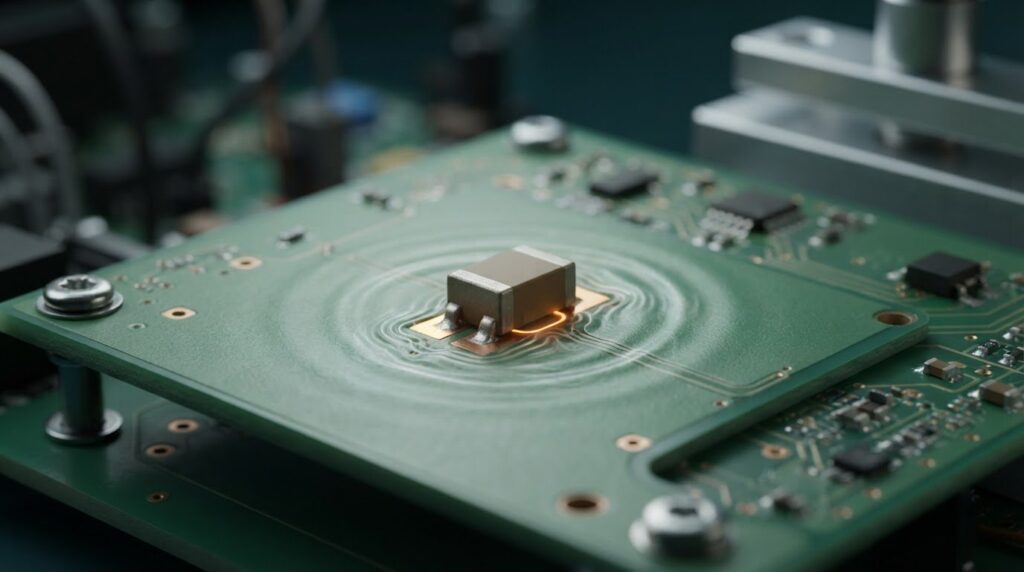
An MLCC can turn electrical switching into audible sound and unwanted signal disturbance. Effective MLCC acoustic microphonics elimination techniques…
MLCC Testing Standards, International Recognition and Records
Industrial MLCC qualification is not established by a single test. Applying MLCC qualification testing standards for industrial electronics means…
Ceramic Capacitor Insulation Resistance Degradation Under Humidity: Causes, Testing, and Mitigation
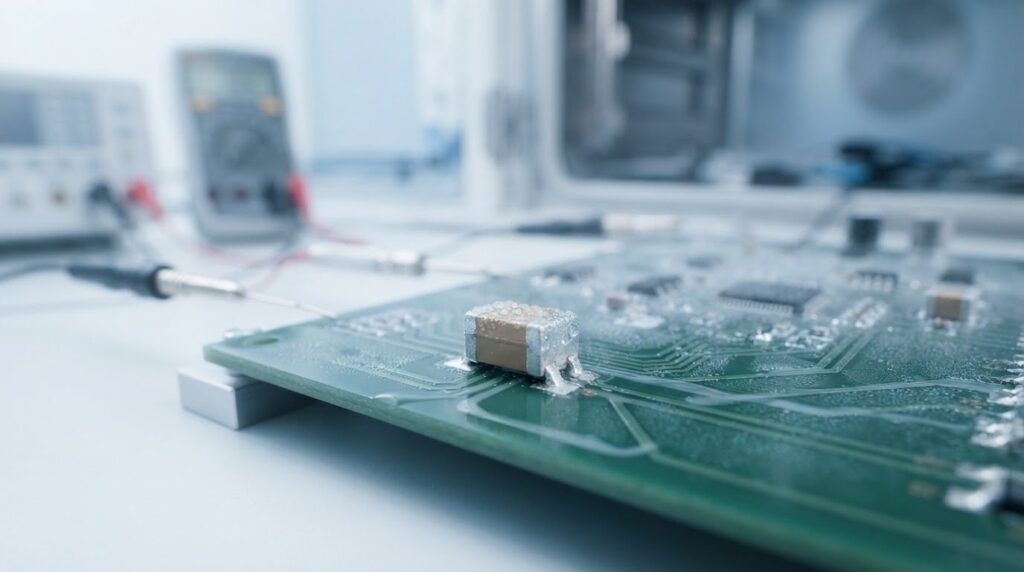
A falling insulation-resistance reading doesn’t automatically mean an MLCC is permanently damaged. Ceramic capacitor insulation resistance…
Wholesale Ceramic Capacitors: A Strategic Procurement Guide for OEMs and EMS

Relying on traditional tier 1 distributors for your high-volume MLCC needs is currently costing your facility up to 22% more than necessary in annual…